New York Film Festival 61 Screenings
The Beast (Bertrand Bonello)
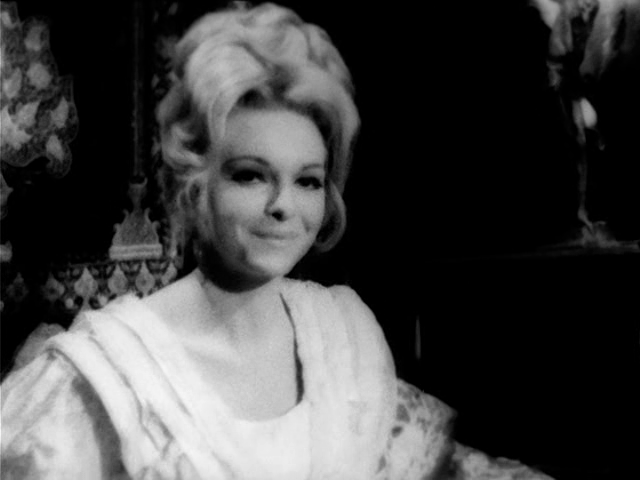
In his 1903 novella The Beast in the Jungle, Henry James distilled one man's existence into a 50-page rumination on living a life of fear, avoiding the title creature in whatever form he (both the character and, as many scholars suggest, James himself) imagined it would take. Bonello's perverse adaptation is radically expansive, flitting between 1910, 2014, and 2044 with several other eras represented in between. And the beast takes many more forms here - unconsummated love, perceived slights voiced by an incel, a world overrun by robots and artificial intelligence. I want to say little more here to preserve the myriad surprises in store except to note that the first third moves like a glacial prestige project. But stick with it and watch the thing go haywire. In its varied cognitive registers, its crucial meditation on the transhistorical nature of fear and grievances, and its multifarious soundtrack, all delicately balanced such that it forces you at the end to flash over the previous two-plus hours and long to watch it again immediately, it just might be Bonello's masterpiece (so far!).
Grade: A (it's such an off-kilter experience that I need more viewings to be surer but I can easily imagine this winding up an A+)
The Zone of Interest (Jonathan Glazer)
Another radically reimagined adaptation, this time of Martin Amis' 2014 novel about romantic intrigue amongst Nazi officials against the backdrop of Auschwitz. Where Amis used pseudonyms, Glazer, who wrote the screenplay, portrays the actual longest-running Auschwitz commandant Rudolf Höss (Christian Friedel) and his wife Hedwig (Sandra Hüller). As with his previous outing, 2013's Under the Skin, Glazer places cameras at various points throughout the bucolic Höss home, mere meters away from the atrocities of the death camp, and allowed the actors to move naturally throughout the location. The lack of analytical editing (at least from the perspective of the performers) is an obvious attempt to represent the banality of evil. But as with so many such projects, the question as to what exactly is being illuminated here remains elusive and the pretensions to objectivity utterly misplaced in a film on this subject. And there's an attendant naivete accompanying Glazer's m.o. During the Q&A, he noted that he wanted to avoid a straightforward representation of the Holocaust: “The idea of not showing, not reenacting, the atrocities or the violence was absolutely mandatory for me…There were two films, the one you see and the one your hear.” That second film comprises the soundtrack and we frequently hear gun shots and cries of agony in the distance (and several times not so in the distance). This assiduously constructed soundscape is as much as reenactment of Holocaust atrocities as Schindler's List and to suggest otherwise is to fall into the trap of conceiving of violence as a purely visual phenomenon or as instantiated in a limited visual palette, e.g., Michael Haneke's contention that he never shows violence in Funny Games. The Zone of Interest is nowhere near as execrable as that candidate for the worst film ever made. But it's marked by a similar confusion, especially given how many glimpses of violence Glazer treats us to in the film we see, e.g. a ubiquitous chimney pumping out smoke, fire, and ashes from ovens burning up to 10,000 bodies a day and two scenes centered on the teeth of murdered prisoners.
Grade: B-minus
AGGRO DR1FT (Harmony Korine)
Four Unloved Women, Adrift on a Purposeless Sea, Experience the Ecstasy of Dissection (David Cronenberg)
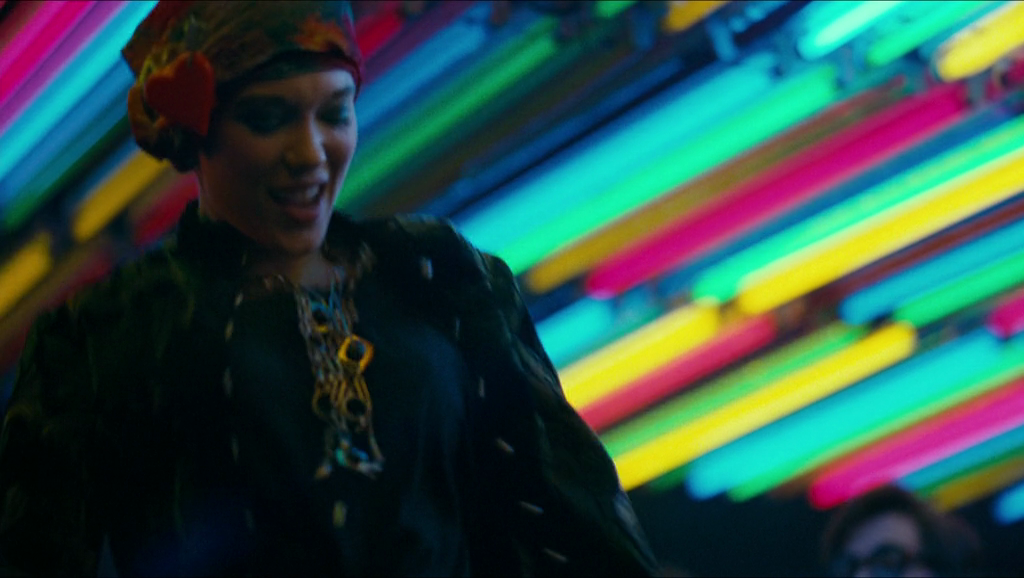
The atmosphere in which this screening took place (at midnight on a Sunday-becoming-Monday night) was as noteworthy as the film itself. Weed permeated the air about ten minutes before Korine took to the stage to introduce the film. He noted the smell but anyone could be forgiven for thinking he lit the bong given his wacky introduction. Five chairs were on the stage below the screen set up for a previous (or subsequent?) Q&A. Korine confessed he was weirded out by them, repeating "Where did the people go?" several times. It all became too much for him so he had NYFF staff remove the chairs. After he himself removed the final remaining chair, we thought he was finally ready to discuss the film. But he then thanked us for coming and the screening started. Typically, the carnivalesque environment that greeted the screening would have pissed me off. But Araabmuzik's carpet bombing soundtrack flattened any unwanted sound (indeed, the festival programmer who introduced Korine told us we should silence our phones but it wouldn't matter either way). Still, the young hetero couple, pretty model types, in front of me were extremely fidgety throughout. The dyed blonde gal kept looking in every direction, constantly whispering blissfully unheard somethings to her shaggy-haired companion, and left the theatre at one point during the 80-minute film. During the end credits, they still couldn't contain themselves and passed back and forth an iPhone on which they were playing chess. Three even younger looking guys seated next to them kept chitchatting and taking pictures of a person in full bondage gear complete with a jet-black facekini. The film was Spring Breakers told through infrared, an obnoxious gambit that requires the captivity of a festival showing to make it through. Somehow, it lowered my blood pressure and I wound up loving the experience. Preceded by a quizzical four-minute Cronenberg short of dissected female mannequins washed up on a beach with entrails spilling out all over.
Grade: A-minus
Grade for the Cronenberg: meh
.jpg)
.jpg)
%20.jpg)
Labels: Bertrand Bonello, Harmony Korine, Jonathan Glazer, NYFF
posted by Kevin John at 1:40 PM
0 comments