Thursday, August 08, 2024

Trap (M. Night Shyamalan, 2024)

POSSIBLE SPOILERS

There's a moment in Trap, M. Night Shyamalan's latest folly (a word I employ with affection), that is as much a product of its time as Psycho was to 1960. Unable to tame the digital wilds of ebooks and screeners containing spoilers, Hitchcock could never hope to preserve the shock of the shower scene in 2024. But today, when mass communication and interpersonal communication are merging ever closer, Shyamalan bends our constant presence online (and the amped ubiquity of celebrity culture) to his suspenseful needs. In a pivotal scene, pop star Lady Raven (Saleka Shyamalan) jumps on TikTok Live to inform her millions of followers that there is a man being held captive. She knows only a few clues but once she provides those to her fans, they respond instantly and manage to locate and rescue the prisoner. Here Shyamalan uses the implausibility of the slasher genre to his advantage. You may feel it's unrealistic that a pop star could have immediate access to her fans. But that absolutely tracks with modern celebrity culture and the instant nature of digital life. It's equal parts preposterous and utterly believable, one of Shyamalan's many great attributes as a director. 

What's harder to swallow are the machinations of the serial killer Cooper Adams (Josh Hartnett, a perfect role for his post-pretty boy victory lap). As with Jason, Michael, and Freddy, the man displays inhuman feats of strength and stealth. And when implausibility shades into confusion, I bristle. For instance, in the third act, how the hell does he manage to get out of the limo surrounded by Lady Raven's revenge-stoked fans? Because he put on a t-shirt he found on the passenger seat? Huh? 

Still, Trap is truly a folly because it's less a slasher film than a shameless vanity project for his daughter Saleka who stars as Lady Raven and gets to perform a full album's worth of her self-penned songs at a concert that comprises most of the first half of the film. There's even an accompanying album you can enjoy in all its meta glory. The songs are standard-issue bland pop, kind of like Ray of Light as an aesthetic strategy 30 years après la lettre. But the matter of the quality of the songs evaporates as Lady Raven takes an active role in the narrative and evinces a charity that would shame Mother Teresa let alone Lady Gaga. Where Cooper is Pure Evil, Lady Raven is Blinding Goodness as the film starts to take on Sextette proportions of delusions of grandeur. As an eternal lover of Sextette (the first half, at least), I must bow to both Shyamalans' shamelessness. And the fact that the people I saw it with had such passionately divergent reactions (the Mr. loved it, my two nieces and sister loathed it) makes me weak, hence the suitably preposterous grade below.

Grade: A-minus

Labels: , , ,

Saturday, July 20, 2024

Blow Out (Brian De Palma, 1981); The Fog (John Carpenter, 1980); Le Tempestaire (Jean Epstein, 1947)

In his terrific new book Playful Frames: Styles of Widescreen Cinema, Steven Rybin writes that the images in The Fog (John Carpenter, 1980) "haunt us in ways that go beyond their functional place in a cleanly modulated, classical narrative, taking on, as so many images in Carpenter’s cinema do, a distinctive status as haunting details that remain with us long after the details of the narrative drive have been forgotten" (167). Rybin's contention here is, of course, the escape valve defenders of horror/slasher films wield to dismiss the genre's frequently sloppy narratives, especially their often risible endings. And while I agree with Rybin at least with respect to The Fog at its best, the narrative drive sometimes sticks with you despite your best efforts to go along with the style-over-substance defenses of the genre. This is an unenviable situation to find oneself in because you get pilloried if you dare to bring up some narrative inconsistency or even just request basic story information to make sense of the thing. 

Unfortunately for me, the one moment I remembered from Blow Out (Brian De Palma, 1981) when I saw it first-run at 11 years old (!) was the scene with the hooker and the sailor in the train station phone booth. Given my age, I thought there was some arcane sex thing happening that caused the sailor to leave the phone booth in disgust. But over forty years later, watching the film again last week, I still don't know! Or rather, I know only slightly more. I'm assuming what happened is that the sailor came too quickly. I also assume that they're both upset about this because they had agreed on $30 for a 30-minute session. But a 30-minute blow job in a public place? Why is such a ludicrous deal even on the table? And why does the hooker get so initially upset about the sailor's quick nut? It's $30 for a job that took about a minute tops. 

OK so fine, I'm focusing on something drearily specific and ignoring all of De Palma's hallmark fireworks. But then why include this exchange in the first place? Since Burke (John Lithgow) is going to kill the hooker anyway, why not just have Burke proposition her and cut out the sailor entirely? And this in a scene which is extraneous to begin with as greyer eminences than me such as Robin Wood (in Hollywood from Vietnam to Reagan... and Beyond) have pointed out. Why not cut the fat and get to the fireworks that are De Palma's raison d'être

Criticism of this nature gets you accused of being one of what Hitchcock called "our old friends, the plausibles," those viewers who would ignore questions of form while harping on implausible plot points. The irony here is that the only such moment in Hitchcock's entire oeuvre that renders me a plausible, as opposed to dozens in De Palma's, is the scene in which Cary Grant holds onto the knife in Townsend's back in North by Northwest, an action I find narratively lazy. But all viewers become plausibles at some point, even De Palma's most ardent supporters. My plausibility meter gets triggered by violence, especially against women whose murdered bodies have been strewn across a century-plus of cinema. If a director is going to have a character murdered, then all the narrative t's better be crossed in order to justify the slaughter to whatever extent justification is even possible. If a murder is not going to approached with a certain amount of gravitas, then a narrative gaffe will only cheapen the effect and infuriate all the more. For me to accept an implausibility, there must be some other compensation beyond a gorgeous tracking shot or rococo set design. And I get it, misanthropes - humans are difficult to like. Let me hold off on any moral indignation to therefore state that it's easy and hence boring to imagine them slaughtered. Attempting to make even the barest of interpersonal connections with others would make for a fresher cinema if only because such a route is more difficult and hence consistently ignored by mainstream Hollywood filmmakers. (And quick, horror fans - name the actress who played the hooker).

Another irony is that the hooker/sailor scene did not cancel out whatever pleasure I took in Blow Out. In fact, I prefer it to Sisters, Carrie, Obsession, The Fury, and Dressed to Kill. It's never boring, the film production milieu is a cinephile's delight, and there are plenty of moments ridiculed by the plausibles that I'm perfectly fine with, namely, Jack's (John Travolta) reconstruction of the car crash via photographs from a magazine. A bigger problem, as always, is where the film winds up. Jack grows obsessed with pursuing justice for the Chappaquiddick-like incident he witnessed near the start of the film. Meanwhile, Burke is tasked with covering up the incident by killing Sally (Nancy Allen), the hooker who survived the car crash and can confirm what really happened on that bridge. Burke uses this convenience to become a serial killer and murder several other women in the hopes that Sally's eventual murder will be chalked up as merely one more thereby dissociating it from the car crash. The final shot confirms that Jack has abandoned his pursuit of justice in mourning Sally's murder. The film thus morphs from a political thriller into a slasher film, a trajectory that Chris Dumas, in his punky Un-American Psycho: Brian De Palma and the Political Invisible, claims "makes Blow Out so difficult to read, to sort into coherence" (185). 

Quite to the contrary, Blow Out is all too coherent. It exemplifies Hollywood's compulsion for supplanting meditations on larger sociopolitical structures/institutions with stories driven by the psychology of an individual character. And it belongs to a distinctly post-1960s tradition of relinquishing oneself to the idea that corruption and violence are an indigenous part of American life and there's nothing one can do about it. In this respect, Blow Out is of a piece with such dubious faves as The Godfather saga and Chinatown. For Dumas, "this is how De Palma might be said to have a purely negative politics, as Adorno might be said to have had" (197), one which highlights how we are all whores with a price (200), how political crime "disappears in a blizzard of information noise," and how a "protagonist can only and always fail" (184). For me, it's permission to remain weak-willed and mutter "we're so fucked" when political corruption gets (or rather, continues to be) intense so we can hide our heads in the sand instead of organizing to fight. It's an insult to those who (foolishly, in this hopeless conception) hold doom at bay and battle for a better world. 

The Fog is certainly less ambitious than Blow Out. And its narrative is even more of a mess. As per horror ordinance, the ending is godawful; it's Carpenter admitting "oops - we forgot to kill off this important character so let's get that out of the way immediately before the end credits." And it has implausibilities that drive me bananas such as Jamie Lee Curtis wasted as a young gal implausibly (and quickly) falling for a man many years her senior (the few times it's the other way around, it's almost cause for a 20/20 exposé). But other implausibilities won my heart because they're not tied to violence and/or political resignation. For instance, Adrienne Barbeau's DJ is the source of much of the film's bizarre, even poetic charm. Implausibly, she plays a sort of cocktail jazz during her third-shift sets (I later discovered all of the songs are library music!). And there's a gorgeous shot of her implausibly playing station identification tapes (they sound eerily like number stations) on a cumbersome recorder as she descends a mammoth staircase to a lighthouse, the implausible location for her radio transmissions. Here is where implausibility shades into bafflement and the film takes on some of the hypnotic, indigestible quality of the best art films. By the climax, I didn't mind when she implausibly broadcasts to her listeners the trajectory of the murderous fog, tracking its every movement with a hilarious specificity (a paraphrase: "It's now winding its way down Applebury Lane right past Mrs. Fish's house!") 

Also lulling and attractive were the many shots of the still waters awaiting the fog's impending invasion. They reminded me of the infinitely superior Le Tempestaire (Jean Epstein, 1947). One of the great head films, Le Tempestaire runs 23 minutes and does indeed feature a story. But it's merely a skeleton through which Epstein spaces out over the waters crashing off the coast of Brittany on Belle-Île-en-Mer. Through slow-motion, fast-motion, reverse, and long takes, Epstein transforms the titular tempest into a newly baptized form of nature, one with rules that transcend the natural world. It may be just as politically escapist as Blow Out. But it's far breezier and inexhaustible in its ability to dumbfound.

The version here has no English subtitles but you really don't need them. EDIT: Or you can enjoy it in better quality and with English subtitles here (thanks to the great Patrick Friel).

Blow Out: B+

The Fog: A-minus

Le Tempestaire: A+

Labels: , , , , , , ,

Wednesday, March 16, 2022

Fresh (Mimi Cave, 2022)

Damn straight I was on the edge of my leather recliner at the climax of Fresh. But this is yet another awful horror film I've been suckered into watching, so insulting in its sloppiness that I rue the expenditure of time and emotional energy. The hook here is a supposed feminist reworking of misogynist 1980s slasher film tropes. So instead of one final girl, we get three although director Mimi Cave and/or Lauryn Kahn couldn't bear jettisoning the idiotic trope of "let's split up," not to mention the idiocy of the main character winding up in such a hideous situation in the first place. All of which might be forgivable if Cave/Kahn didn't waste our investment committing several Storytelling 101 errors at the end. An important secondary character peaces out in an act of insulting narrative convenience (and I'm being generous here - it's more baffling and random than anything). And one of the bad guy's lackeys is left unaccounted for as the end credits roll. Did Cave/Kahn forget he existed? Why was he included in the film if he served no narrative purpose? No one on the set or in preproduction brought this up? The oversight is not even used to amplify the horror in an unrealistic manner as with the rewind in Funny Games or the supernatural powers of Jason, Michael, Freddy, etc. There should be some sort of payoff for fear. In its absence, I'll gravitate towards more rewarding works of art such as the filmographies of Roberta Findlay and Doris Wishman, Birdemic: Shock and Terror (James Nguyen, 2010), and The Boston Strangler (Richard Fleischer, 1968) which I saw for the first time last weekend and oh. my. god.

Fresh: D


Labels: , , ,

Thursday, October 28, 2021

Four trauma-horror films

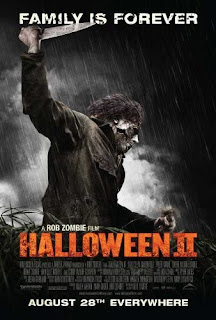
Stories centering on trauma have the potential to inject some complexity into horror/slasher flicks. In a genre where so many characters are slaughtered quickly and damn near anonymously, a film that focuses on the aftermath of surviving Jason or Freddy could be a welcome salve. But first and foremost, a genre pic has to deliver the genre-pic goods. So awful films like Halloween Kills (David Gordon Green [the contemporary Hollywood director with the most squandered career potential?], 2021) and Halloween II (Rob Zombie, 2009) constantly pull away the focus from the trauma story to revel in, wait for it, the quick and anonymous slaughter of characters.

Halloween Kills is particularly repulsive in this regard. Whatever weightiness may have been gained in the survival story (and not too damn much of that given the corny script co-written by Green and Danny McBride) is utterly extinguished by the exigency of requiring Michael Meyers to torture and slaughter a cast of hastily dispatched minor characters. And hooray for progress - an elderly interracial couple, a gay male couple, and a teen boy who wears a dress are all murdered after their allotted five minutes of screen time.

I've been told for years to watch the director's cut of Zombie's Halloween II and have fielded all sorts of claims for it. It's a de facto experimental/avant-garde film financed by Hollywood. It's neorealist. It's a profound mediation on class and trauma. It's one of the best films period of the 21st century. Me, determined to climb whatever mountain of drugs these people were on, I made it halfway through my second screening until my stomach could no longer take it. 

There's a level of commitment here lacking in Green's disaster. But again, Zombie must linger on ever-gorier murder which leaves less time to develop the trauma story, a story that offers little insight into trauma to begin with. And even more time is wasted during each slaughter since Michael (a dead ringer for Rob Zombie this time out) is beset by visions of his mother and his younger self carting around a white horse and imploring him to kill. I presume these are the putative experimental portions of the film. But Zombie tethers these visions tightly to Michael's point of view so that dream and reality are neatly compartmentalized according to the dictates of conventional continuity form. As such, the story remains drearily straight-forward. Then there's the godawful psychobilly band that plays not one, not two, but three (3!) songs (or so it felt like) in a late-second-act party scene. ARGH! 

And for those who couldn't care less about compelling stories of trauma and will brook no complexity or weightiness in their slasher flicks, I get it. I adore the time-wasting spontaneous outbursts of song in musicals and sex scenes in pornography; you dig the gore in slasher flicks (this is to leave out avant-garde films which are nothing but wastes of time to most moviegoers). And as with porn, the ante with gore must be perpetually upped. I applaud cream pies and speculum porn and my beloved The 1,000 Load Fuck (more info here and obviously NSFW!); you applaud a dying woman forced to watch Michael jam every knife in the kitchen into her already dead partner's back. And with all the seriousness I can muster, if such a scene helped you through any trauma, I think that's great for you. Hell, I'll even support federal funding for Halloween Kills in that case.

But I've done my due diligence with this genre and I can do so no longer. Life is nasty, brutish, and short and I still think the vast majority of horror/slasher flicks add horror to the world rather than illuminate or mitigate it. I still think they make the basest fundamental attribution errors, catering to a populace that finds the murder of eight people fascinating or even sexy but the murder of 8,000 unworthy of contemplation (a tendency satirized venomously in the terrific Hulu series Only Murders in the Building). I still think they're soul-draining and reactionary in their dread of difference and sexuality. I still find attempts to conceive of the final girl as a feminist hero risible and unimaginative. You have your prejudices and blind spots. I have mine. Allow me them, i.e., suggesting I see the theatrical cut of Zombie's Halloween II would be a sadistic act indeed. 

By glorious contrast, Lamb (Valdimar Jóhannsson, 2021) and Titane (Julia Ducournau, 2021) are both horror films (also a slasher film in Titane's case!) that concern the trauma of losing a child but respect that narrative by diving deeply into each respective story, revealing myriad facets to the trauma along the way. Where the Halloween films are mind-numbingly paint by numbers, Lamb and Titane are outrageous and unpredictable. Therefore, I won't reveal any spoilers here. But both remind me of the most moving moment of my favorite television show, The Simpsons

In the 1997 episode "The Principal and the Pauper," Principal Skinner is revealed to actually be one Armin Tamzarian after the real Seymour Skinner arrives in Springfield. A flashback explains that Tamzarian and Skinner were in the Vietnam War together. When Skinner is missing in action and presumed dead,  Tamzarian comes to tell Skinner's mother Agnes the news. But instead, he pretends to be Skinner. Remarkably, Agnes pretends along with him. She tells him to go to his room and whispers, "Upstairs. Third door on the left." This was the apex of American postmodernism in the 1990s, positing that fakery and persona play were an unavoidable fact of life.

Similarly, Lamb and especially Titane are about the necessary lies we tell ourselves just in order to wake up in the morning (in this respect, they resemble M. Night Shyamalan's typically brilliant and consistently surprising Apple TV series Servant). Each story turn, no matter how preposterous, houses a touching moment in which damaged characters make do and still wind up making deadly mistakes. And because there is no need to keep a franchise alive with an indestructible murderer, Jóhannsson and Ducournau can afford to spend some time situating the madness into the textures of daily life. The characters and their milieus are given their due rather than their stories coming at us in half-assed chunks in between bouts of Michael Meyers' supernatural prowess.

A colleague recently warned me never to let anyone try to tell me films like the titles in the Halloween franchise contain some sort of profundity. I am relieved to finally be taking his advice.

Oh yeah and before I blissfully forget them forever, The Empty Man and Malignant sucked too.

Halloween II: C

Halloween Kills: D-minus

Lamb: A-minus

Titane: A-minus


Labels: , ,

Saturday, March 27, 2021

Halloween (John Carpenter, 1978)

I've always despised this film for amping up the trend of slaughtering sexually operational teenagers (and let's be specific here - Gen X teenagers in the most immediate wake of forever-aging Boomers). This time, I liked it both more and less. The puritanism came off more muted because the violence is far less gory than I remembered. In fact, the slower editing rhythms feel positively ancient today. There's even a noteworthy pause after Michael kills Bob. I'm not sure what it means. It definitely doesn't feel like it's a moment of remorse or even reflection for Michael, more like blasé curiosity. But the resulting languor juts out in a genre where the dispatched are quickly forgotten. 


I also admired the lazy tracking shots which had the effect of delineating the ambient boredom of the suburbs, the precondition for teens smoking pot, drinking beer, and having sex. At this remove, it feels more like an art film and I wonder if my students today would even bother finishing it.

But wow is the story ever a botch! Loomis (Donald Pleasance) is barely fleshed out so we have little idea as to why he's so willing to stop Michael that he'll wait for him in Michael's abandoned childhood home (and strongarm the local police into letting him do so). (Yes, I know he's fleshed out in the footage Carpenter shot for the TV version. That info and $2 won't get you an Irish cream cold brew at Starbucks.) Who exactly is Loomis? Carpenter gives us the barest portrait of an adversary and then moves on to his drifting dolly shots. 

And as with Jason, what does Michael want? Why does he slaughter these particular teenagers? Furthermore, why does he try to kill Laurie (Jamie Lee Curtis, fab)? As the final girl, she's not sexually operational. So then why must he torment her? The characters are just these empty vessels for Good and Evil. As we've learned from the structure of musicals and feature-length pornography, there has to be something at narrative stake for the spectacle (of song and dance, of hardcore sex, of gore) to signify. Halloween just feels like a template for dozens of crappy films to come. And, of course, there's a great deal of historical significance to that. But this review consecrates the fact that I need never watch it again.

Grade: B (upped a notch for that historical significance)


Labels: , , , ,

Tuesday, November 03, 2020

April Fool's Day (Fred Walton, 1986)/My Favorite Slasher Films!

MASSIVE SPOILERS!


I hate slasher films so much (their dread of difference, their hypocritical puritanism that punishes sexual activity but courts unfettered violence, their implicit Boomer ideology in calling for the annihilation of 1980s youth, etc.) that I applaud a terrible film like April Fool's Day. For a good 75 minutes or so of its 89-minute running time, it's a numbing experience with inscrutable character behavior and Mad Lib dialogue ("Boy, when she said 'well,' she really meant 'well.' Who dug this thing - Pocahontas?" Huh??). But then SPOILERS, it was all a prank! No one dies in this slasher film, not even in the cheat ending! In fact, it becomes a straight-up comedy in its penultimate scene. The hero's continued screaming when confronted with a no-longer-dead character is genuinely hilarious (albeit mean). No murders, no punishments, a good time had by all? That's progressive enough for me!

Grade: B+

Fun facts:

I saw this film in its first run at either Mann's Chinese Theatre or The Egyptian Theatre in Los Angeles. Can't recall which but either was Mecca for a young movie geek.

There was a novelization by Jeff Rovin, the author (I assume) of my beloved The Signet Book of Movie Lists

And here's a list of my favorite slasher films which should demonstrate how much I loathe the genre since most are either too early or too arty to be slasher films. 

April Fool's Day
Badlands
The Boston Strangler
Un couteau dans le coeur
(Knife + Heart)
The Driller Killer
Follow Me Quietly
Frenzy
Gideon of Scotland Yard
I Spit On Your Grave
(original)
M (Fritz Lang, 1931)
Peeping Tom
Psycho
Psychos in Love
Se7en
Stranger by the Lake
10 Rillington Place
While the City Sleeps 


Labels: ,